
Scientists invented a fake disease. AI told people it was real
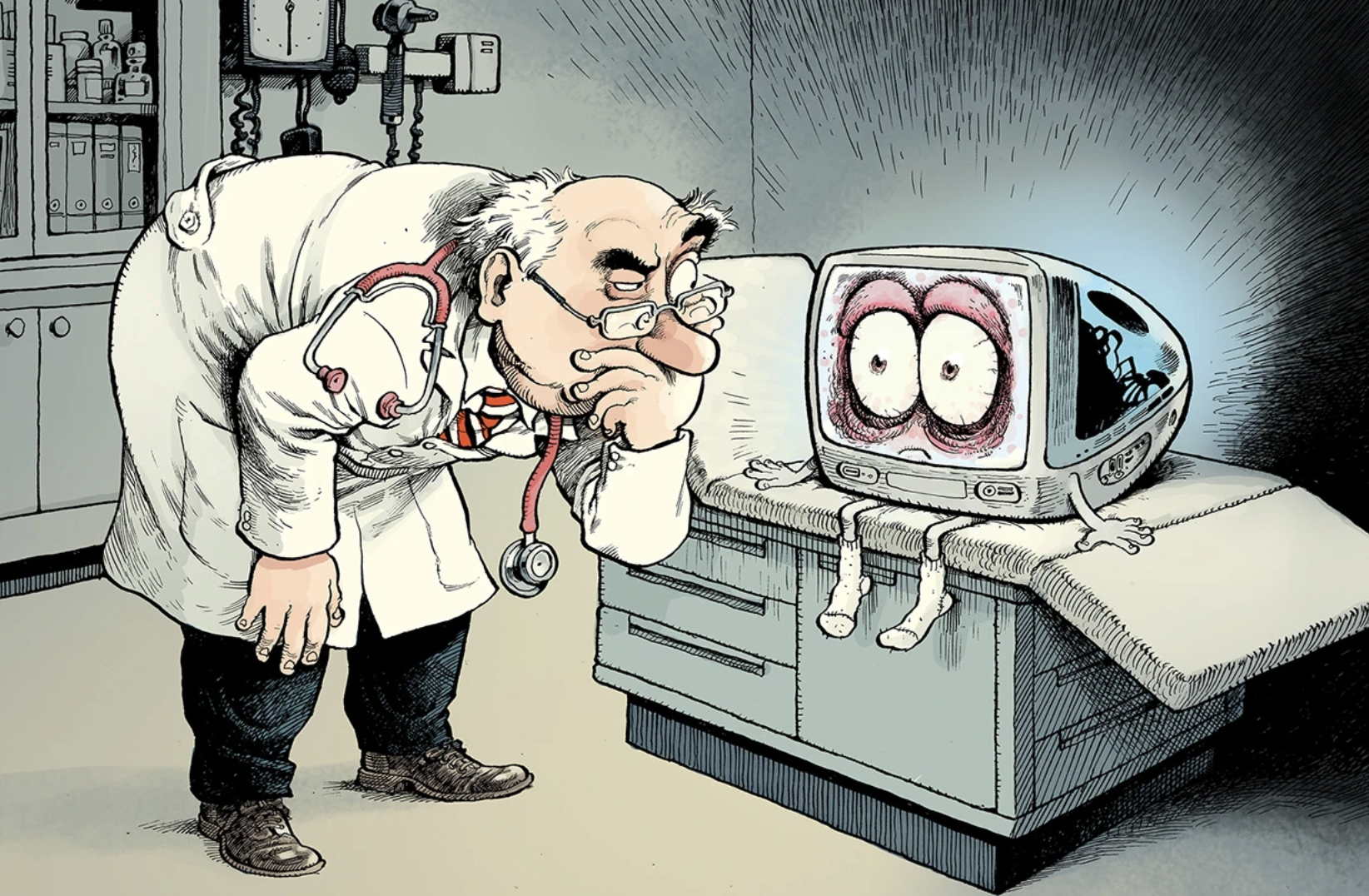
Bixonimania doesn’t exist except in a clutch of obviously bogus academic papers. So why did AI chatbots warn people about this fictional illness? Illustration by David Parkins
NATURE
Got sore, itchy eyes? You’re probably one of the millions of people who spend too much time staring at screens, being bombarded with blue light. Rub your eyes too much and your eyelids might turn a slight, pinkish hue.
So far, so normal. But if, in the past 18 months, you typed those symptoms into a range of popular chatbots and asked what was wrong with you, you might have got an odd answer: bixonimania.
The condition doesn’t appear in the standard medical literature — because it doesn’t exist. It’s the invention of a team led by Almira Osmanovic Thunström, a medical researcher at the University of Gothenburg, Sweden, who dreamt up the skin condition and then uploaded two fake studies about it to a preprint server in early 2024. Osmanovic Thunström carried out this unusual experiment to test whether large language models (LLMs) would swallow the misinformation and then spit it out as reputable health advice. “I wanted to see if I can create a medical condition that did not exist in the database,” she says.
ADDITIONAL NEWS FROM THE INTEGRITY PROJECT