
Reaffirming Scientific Medicine Through Physician Leadership in Health Care Technology and Innovation
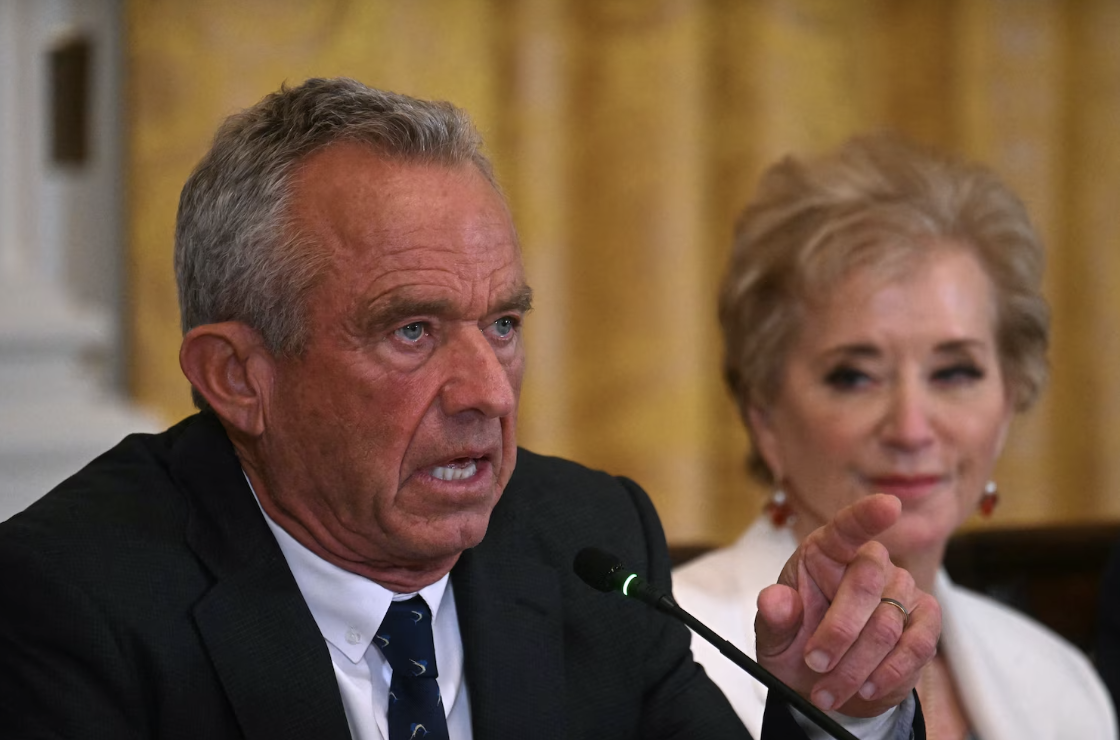
Secretary of Health and Human Services Robert F. Kennedy Jr., speaks as Secretary of Education Linda McMahon listens during a Make America Healthy Again Commission event at the White House in Washington last year. Photo by Jim Watson/AFP via Getty Images/ABC News
PAPER PRODUCED BY
Baker Institute for Public Policy at Rice University, Houston
AUTHOR
Peter Hotez, M.D., Ph.D., D.Sc. (hon), Senior Fellow in Disease and Humanity, Center for Health Policy, Baker Institute for Public Policy; Professor of Pediatrics and Molecular Virology and Microbiology and Dean, National School of Tropical Medicine, Baylor College of Medicine
EXECUTIVE SUMMARY
Since the early 1800s, American medicine has reflected a persistent divide between two opposing worldviews: scientific versus sectarian medicine. Scientific medicine was first brought to America in the late 1700s by physicians who trained at the University of Edinburgh where they became steeped in the views of the Scottish Enlightenment before emigrating to the North American British colonies. Over the next two hundred years, such views and attitudes converged with laboratory science and the expanded availability of high-quality microscopes and other scientific instruments. In time, scientific medicine embraced discoveries based on modern molecular and cellular biology. In contrast, alternative or sectarian medicine approaches such as homeopathy and eclecticism emphasized personal experience and theoretical frameworks outside the scientific mainstream.
The rivalry between these approaches endures, reflected in the rise of wellness and influencer industries that represent a modern iteration of sectarian medicine. In 2025, it energized and gained political influence from the U.S. Department of Health and Human Services (DHHS) and its Make America Health Again (MAHA) campaign.
In its effort to revive sectarian medicine, the MAHA movement and DHHS secretary simultaneously seek changes that could erode public confidence in scientific medicine. These efforts risk weakening U.S. medical schools and academic health centers (AHCs), which the movement claims have been influenced by the pharmaceutical industry or that their principal outputs, namely scientific journals and papers, are compromised. Accordingly, the U.S. government has proposed significant reductions to the budget of the National Institutes of Health (NIH) and other health care cuts, as well as new political criteria for research universities and potential financial penalties on taxes on their endowments..
READ THE REST OF THE EXEXCUTIVE SUMMARY AND THIS RESEARCH PAPER IN ITS ENTIRETY
RELATED RESEARCH PAPERS FROM THE INTEGRITY PROJECT