
‘Criminal’ Becomes Catch-All: Where misinformation, public perception and policy collide
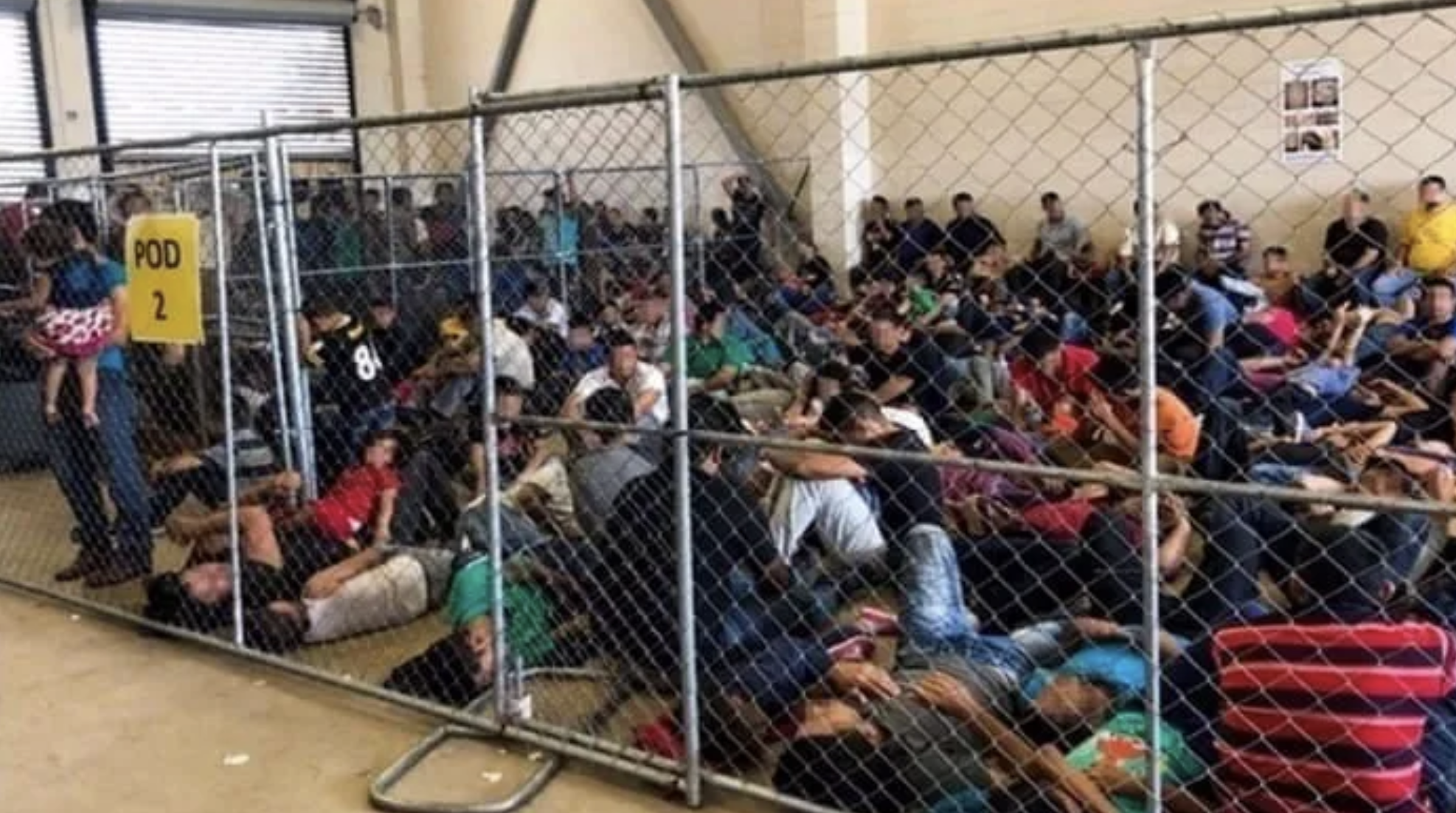
Inside an Immigration and Customs Enforcement facility in California shortly after the administration’s crackdown on ‘criminal’ migrants, which also included entire families with children.
The Integrity Project
Who counts as a “criminal” anyway? Should be easy to answer, right? Traditionally, it's been someone who breaks a law.
But the use of the word “criminal” takes on something that resembles linguistic gymnastics should you consider our current public discourse and immigration policy; evolving from a campaign talking point into central justification for executive action, enforcement practices, and broader administrative strategy. Along the way – from election rhetoric and executive orders to enforcement rationales – the term has functioned not merely as a legal descriptor but as an inflammatory and overly broad framing device that shapes public perception, legitimizes policy, and blurs distinctions between civil and criminal law. Examining how “criminal” has been deployed reveals how language influences both the scope of federal authority and the lived realities of those subject to immigration enforcement.
While campaigning, candidates frequently rely on simplified and emotionally resonant language to mobilize voters. The term “criminal,” when applied to noncitizens, has often been used expansively to describe a wide range of individuals, from those convicted of serious offenses to those whose only violation is unauthorized entry or overstaying a visa. The purposeful strategy compresses legal nuance into a binary distinction between law-abiding citizens and lawbreaking outsiders. By doing so, it primes the public to accept stricter enforcement measures as necessary responses to perceived threats, spreading this framing through emotionally charged, identity-affirming online content.
DIFFERENT SHADES OF 'CRIME'
Importantly, immigration violations in the United States are often civil, not criminal, matters. Unauthorized presence alone is generally treated as a civil infraction, adjudicated in immigration courts rather than criminal courts. However, campaign rhetoric has frequently conflated civil violations with criminal conduct, such as calling migrants "rapists and murderers," creating a perception that all undocumented individuals fall into the same category as those convicted of crimes. This conflation has significant implications: it shifts the debate from one about regulatory compliance and humanitarian considerations to one centered on public safety and punishment.
Once in office, administrations have translated this rhetoric into executive action. Executive orders related to immigration enforcement have often emphasized prioritizing the removal of “criminal aliens.” At first glance, this appears to be a targeted approach focusing on individuals who pose demonstrable risks to public safety. However, the operational definition of “criminal” within these policies has sometimes been broadened to include individuals merely charged with offenses, those with minor infractions, or even those suspected of wrongdoing without formal adjudication.
This expansion raises concerns about due process and proportionality. In the criminal justice system, the presumption of innocence is a foundational principle. Yet, when immigration enforcement adopts a more elastic use of “criminal,” individuals can face detention and deportation based on allegations rather than convictions. The administrative nature of immigration proceedings further complicates this issue, as the procedural protections afforded in criminal courts do not always apply in the same way in immigration courts.
The use of “criminal” also plays a key role in justifying detention practices. Federal authorities have increasingly relied on detention as a tool for managing immigration cases, often citing public safety concerns tied to alleged criminality. By labeling individuals as “criminal,” even in cases involving minor or nonviolent infractions, the government can argue that detention is necessary to prevent harm or ensure compliance with legal proceedings. This framing can obscure the fact that many detained individuals have no criminal history or pose minimal risk.
Nevertheless, the false narrative moves through trusted friends, private chats, and like‑minded groups online, where repetition makes them feel true. Platform algorithms boost sensational posts, while a small number of influential accounts and sometimes organized campaigns deliberately amplify misleading claims. Corrections travel more slowly and often fail to reach the same audiences, so everyday users unintentionally become powerful carriers when they share before pausing to verify claims.
CREATING A CLIMATE OF FEAR
The "criminal" descriptor influences public perception and its tolerance for law enforcement activities. When the prevailing narrative emphasizes the presence of “criminal aliens,” it can encourage broader enforcement actions that sweep in individuals who fit generalized profiles rather than specific legal criteria. This dynamic raises the risk of racial or ethnic profiling, as well as the erosion of trust between immigrant communities and law enforcement. When individuals fear that any interaction with authorities could lead to being labeled a “criminal” and subjected to detention or deportation, they may be less likely to report crimes or cooperate with investigations.
Recent enforcement operations illustrate how the “criminal” frame can have lethal consequences for people who are not violent threats at all.
In Minneapolis, federal immigration officers shot and killed ICU nurse Alex Pretti on a city street and, in a separate operation, 37-year-old mother of three Renee Nicole Good while she sat in her car, with later video and eyewitness accounts sharply contradicting initial claims that they posed imminent danger. In other parts of the country, ICE agents have fatally shot motorists during traffic stops and even killed a man who turned out not to be the person they were seeking, yet who was nevertheless treated as a dangerous “criminal” in official statements.
These incidents, which have sparked protests and investigations, show how expansive, fear-laden use of the term “criminal” can help normalize aggressive tactics and make it easier to rationalize deadly force against people whose only alleged wrongdoing may be a disputed immigration or low-level offense.
The evolution of the rationale for deportation further illustrates the impact of this language. Initially, policy justifications often focused on removing individuals who had committed serious crimes. Over time, however, the scope has expanded to include a wider array of infractions, with the label “criminal” serving as a unifying justification. This shift allows administrations to present aggressive enforcement policies as consistent with public safety goals, even when the individuals affected do not align with the original rationale.
At the same time, the use of “criminal” in this context can obscure important distinctions within the immigrant population. For example, individuals with long-standing ties to the United States, including those with families, employment, and community connections, may be grouped together with individuals who have committed serious offenses. This homogenization can make it more difficult to have nuanced policy discussions that consider factors such as rehabilitation, proportionality, and humanitarian concerns.
Critics argue that this linguistic strategy contributes to misinformation by presenting a distorted picture of immigration and crime. Empirical research has generally shown that immigrants, including undocumented immigrants, are not more likely to commit crimes than native-born citizens. However, the repeated association of immigration with criminality in political and administrative discourse can reinforce misconceptions that persist despite contrary evidence. These misconceptions, in turn, shape public opinion and influence policy preferences.
Supporters of stricter enforcement, on the other hand, contend that emphasizing criminality is a legitimate way to prioritize limited resources and protect public safety. They argue that even if the term is used broadly, it signals a commitment to enforcing the law and maintaining order. From this perspective, the use of “criminal” reflects a policy choice to treat immigration violations as serious matters with consequences, rather than minimizing their significance.
Nevertheless, the tension between these perspectives underscores the importance of precision in public language. When terms like “criminal” are used imprecisely or expansively, they can blur legal distinctions, justify far-reaching policies, and contribute to misinformation. Clear and accurate language is essential for informed public debate, particularly on issues as complex and consequential as immigration policy.
MISINFORMATION LEADS TO CRIMINALIZATION
Perhaps most worrisome, repeatedly using the word “criminal” for what is legally a civil violation tends to normalize that framing and creates “criminalization of immigration.” Over time, the use of the word blurs the public’s sense that there is a real legal difference between civil and criminal law. It makes harsh measures like forced detention, aggressive raids and fast-track removals feel more justified to the public, since they seem like responses to a crime rather than to regulatory or paperwork violations.
Normalization of criminalization also dehumanizes the people involved: research on labels like “illegal” and “criminal” in immigration shows that such language encourages seeing migrants as threats rather than as rights-bearing individuals, which lowers resistance to punitive policies. It also feeds misinformation narratives with an increasing number of Americans believing that undocumented immigrants are inherently lawbreakers or more crime-prone, even though empirical data does not support that premise.
Our feeling is that the use of the word “criminal” in discussions of federal immigration policy is fraught with problems. Its use illustrates how language can shape both perception and practice. From campaign rhetoric to executive orders and enforcement rationales, the term has been used to frame immigration as a matter of public safety, often at the expense of legal nuance and factual accuracy. Understanding this dynamic is critical for evaluating current policies and fostering a more informed and balanced conversation.