Measles outbreaks In England and the U.S. expand in part to misinformation
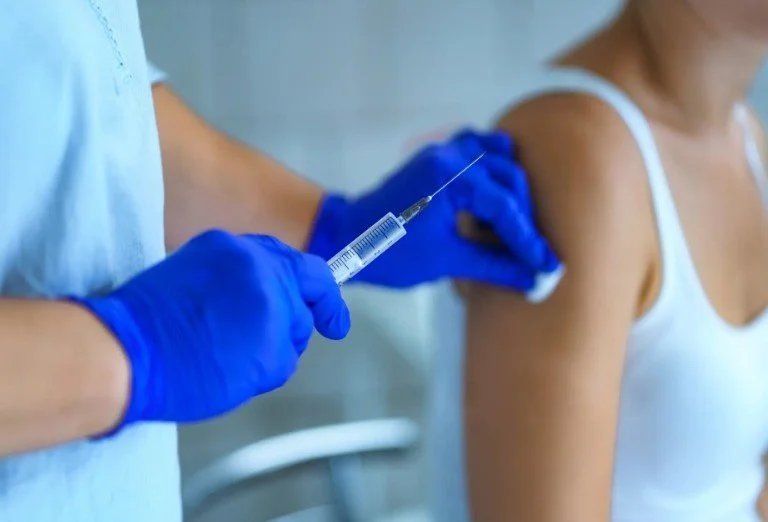
The expanding measles outbreaks in England and the U.S. are causing increased concern among public health officials. Last week, the U.K. Health Security Agency declared a “national incident” over a surge in measles cases across the country. Yesterday, the British National Health Service began a major “catch up” vaccination campaign to ensure adequate uptake of the measles, mumps and rubella vaccine.
Forbes
Read More
Measles and Misinformation Are Two Huge Public-Health Threats
Measles would be gone if we wanted it to be. We’ve had a highly effective, safe vaccine for it for 60 years. But because of rising anti-vaccine sentiments, measles is back, with recent cases in Philadelphia, New Jersey and Virginia. Unless we tackle the misinformation that is at the root of vaccine hesitancy, more children will get sick from this and other nasty, preventable diseases in 2024.
TIME
Read More
As COVID cases rise, doctors worry about the consequences of misinformation
Seeing COVID rates hit another high, and vaccine uptake remain low, doctors don’t have an antidote for something they see as an ongoing risk factor: the spread of misinformation, including on the presidential campaign trail.
PBS NewsHour
Read More
How OpenAI is approaching 2024 worldwide elections
Protecting the integrity of elections requires collaboration from every corner of the democratic process, and we want to make sure our technology is not used in a way that could undermine this process.
OpenAI
Read More
Here’s How AI And Tech Giants Say They’ll Moderate Content In 2024—The World’s Biggest Election Year
Billions of people are voting in elections across the world this year, which experts fear could be undermined by increasingly popular artificial intelligence tools like ChatGPT and the misinformation they enable, prompting some of the world’s biggest tech companies to publicly disclose how they plan to moderate content.
Forbes
Read More
How subtle forms of misinformation affect what we buy and how much we trust brands
Misinformation isn’t just blurring political lines anymore. It’s quietly infiltrating our shopping trolleys in subtle ways, shaping our decisions about what we buy and who we trust, as my research shows.
The Conversation
Read More
Misinformation Isn’t Going Away, So Offer Convenience and Clear Communication About Vaccines
At a webinar hosted by RealClearHealth, I spoke on how “vaccines are one of the few truly cost-effective health care interventions.” When evaluated across a range of preventable transmittable diseases, studies demonstrate that vaccines are worth more than their cost, and increase life expectancy and quality of life. But vaccines are only effective if they are used.
American Enterprise Institute
Read More
How the FBI, NSA are preparing for deepfakes and misinformation issue ahead of 2024 elections
More than half of the world’s population will cast votes this year, making election security a global risk to democracy that extends far beyond the U.S. A rising risk component in democratic elections is the role of artificial intelligence in spreading misinformation that influences voters, including the use of deepfakes.
CNBC
Read More
Philanthropic Efforts to Fight Misinformation Should Start in the Classroom
Video footage of Hamas fighters purportedly parachuting into Israel on Saturday. A photo of an official White House document seemingly showing that the Biden administration is sending $8 billion in military aid to Israel. A video of Israeli air force planes apparently attacking the Gaza Strip last weekend. Each of these is false.
The Chronicle of Philanthropy
Read More
How misinformation drove debates over transgender students and bathrooms in Arizona
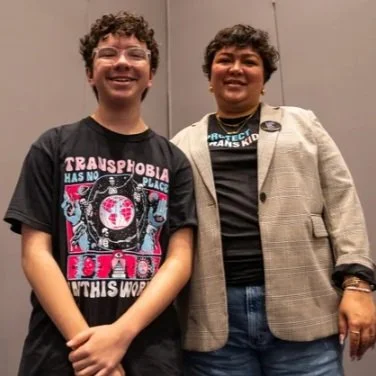
As discussions about transgender students roiled school board meetings across the state in 2023 — particularly about bathroom use — political organizations and conservative think tanks further amplified or distorted fears.
Arizona Republic/AZCentral.com
Read More
Misinformation Seen as Top Global Risk in Year of Pivotal Elections
In a world increasingly fraught with risks, leading near-term concerns are shifting to the dangers of technology and related problems like the spread of disinformation, and away from economic worries, according to an annual survey of policymakers, industry leaders and experts on risk conducted by the World Economic Forum.
Wall Street Journal
Read More
VIDEO: How misinformation works on the brain, according to a psychologist
With the 2024 elections less than a year away, a recent survey found 53% of Americans say they see false or misleading information online every day. Lisa Fazio, associate professor of psychology at Vanderbilt University, joins CBS News to unpack why people fall for misinformation -- and what it's doing to our brains.
CBS News
Read More
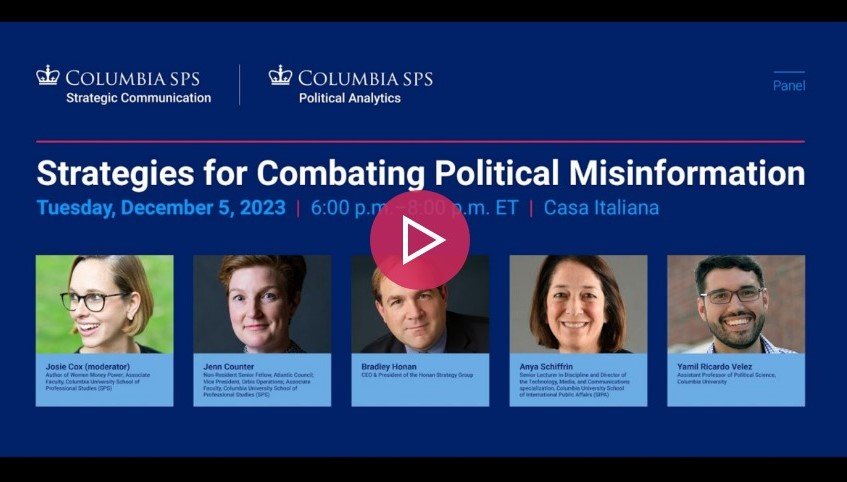
VIDEO: Strategies for Combating Political Misinformation
The M.S. in Strategic Communication and M.S. in Political Analytics programs sponsored a panel discussion on strategies for combating political misinformation.
Columbia University
Read More
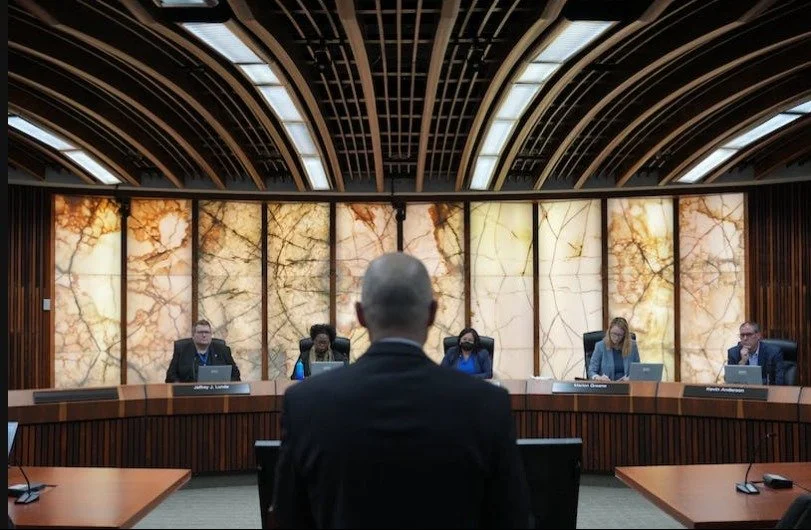
Open government advocates say public forums should be broadcast despite misinformation fears
Residents who want to address elected leaders in a public forum may not have much of an audience, if they have the opportunity at all, as some local governments scale back opportunities for public comment in meetings.
Minneapolis Star-Tribune
Read More
Contrary to politicians’ claims, offshore wind farms don’t kill whales. Here’s what to know.
Unfounded claims about offshore wind threatening whales have surfaced as a flashpoint in the fight over the future of renewable energy.
Associated Press
Read More
VIDEO: Dietitians call on public to be aware of nutritional misinformation in New Year
There is a huge amount of misinformation about food and nutrition on the Internet and many people are often fooled into following this 'advice', even if it doesn't come from a qualified source.
Omaha World-Herald
Read More
Health misinformation is rampant on social media – here’s what it does, why it spreads and what people can do about it
The global anti-vaccine movement and vaccine hesitancy that accelerated during the COVID-19 pandemic show no signs of abating. According to a survey of U.S. adults, Americans in October 2023 were less likely to view approved vaccines as safe than they were in April 2021.
The Conversation
Read More
Concerns with misinformation online, 2023
Misinformation refers to news or information that is verifiably false, inaccurate, or misleading. Misinformation can quickly spread across the Internet, when it is shared by readers and amplified through social media algorithms. The spreading of false or misleading information has the potential to negatively impact Canadians' wellbeing and confidence in public institutions.
Statistics Canada
Read More
State Dept.’s Fight Against Disinformation Comes Under Attack
A Republican-led campaign against researchers who study disinformation online has zeroed in on the most prominent American government agency dedicated to countering propaganda and other information operations from terrorists and hostile nations.
New York Times
Read More
EU investigates X over potential violations of social media law
The European Union on Monday made Elon Musk’s online platform X the first tech company to face an investigation under Europe’s tough new regulations designed to clean up social media and protect people from toxic online content.
PBS
Read More