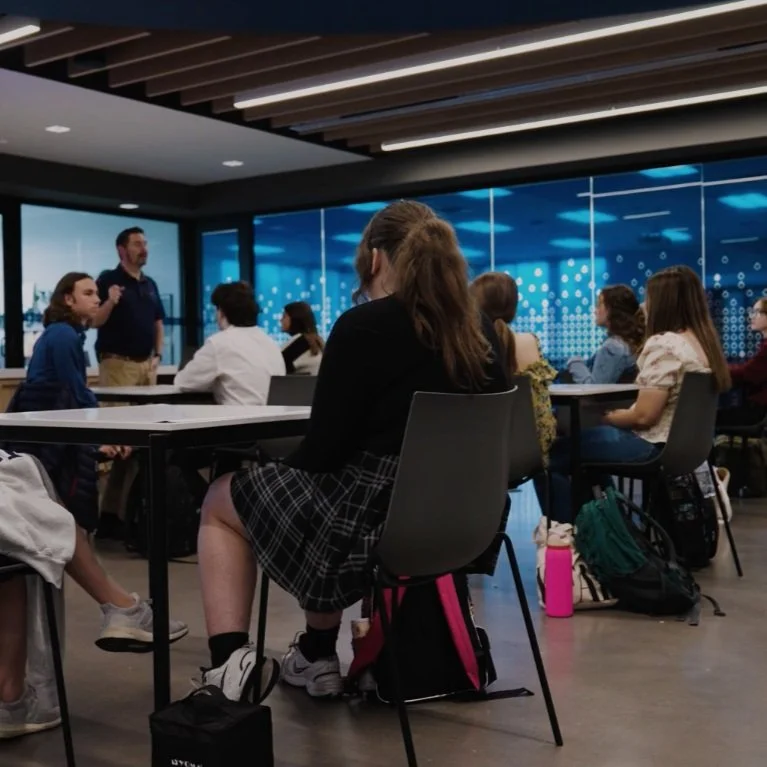
VIDEO: Teens struggle to identify misinformation about Israel-Hamas conflict — the world's second 'social media war'
Texas is one of only four states in the U.S. that mandate a media literacy curriculum in all public schools beginning in kindergarten. Fourteen other states offer some form of media literacy education or online resources to public school students.
CBS News
Read More
Worried About Political Deepfakes? Beware the Spread of ‘Cheapfakes’
Over the summer, a political action committee (PAC) supporting Florida governor and presidential hopeful Ron DeSantis uploaded a video of former president Donald Trump on YouTube in which he appeared to attack Iowa governor Kim Reynolds. It wasn’t exactly real—though the text was taken from one of Trump’s tweets, the voice used in the ad was AI-generated.
Wired
Read More
‘There’s nothing more critical’: California makes schools teach kids to spot fake news
California next year will become one of the few US states to teach students media literacy, a move experts say is imperative at a time when distrust in the media is at an all-time high and new technologies pose unprecedented challenges to identifying false information.
The Guardian
Read More
Is democracy at stake in the 2024 election?
In this episode of "The Middle with Jeremy Hobson," we're asking whether or not you think democracy itself is at stake in the 2024 election - or if those fears are overblown. Jeremy is joined by Maricopa County, Arizona Supervisor Bill Gates and Vernon Burton, a voting rights expert and professor of history at Clemson University.
The Middle
Read More
Disinformation campaigns are undermining democracy. Here’s how we can fight back
Misinformation is debated everywhere and has justifiably sparked concerns. It can polarise the public, reduce health-protective behaviors such as mask-wearing and vaccination, and erode trust in science. Much misinformation is spread not by accident but as part of organized political campaigns, in which case we refer to it as disinformation.
Alliance For Science
Read More
States begin to address media literacy through legislation
Until recently, media literacy has not been a priority for the majority of the country. Only 18 states have some legislative solutions in place for addressing media literacy education. But with generative AI on the rise and increasingly used in everyday digital media states are coming to grips with providing the most vulnerable populations with the tools to help them avoid being misinformed.
Governing
Read More
Attacked by conservatives, UW misinformation researcher gears up for 2024
In a small meeting room on the University of Washington campus, researcher Kate Starbird stood at a glass whiteboard as she brainstormed with two doctoral students how to dissect information posted to the politicized, hyperbolic and often wildly speculative free-for-all that is social media.
The Seattle Times
Read More
What do we study when we study misinformation? A scoping review of experimental research (2016-2022)
The authors reviewed 555 papers published from 2016–2022 that presented misinformation to participants, and identified several trends in the literature—increasing frequency of misinformation studies over time, a wide variety of topics covered, and a significant focus on COVID-19 misinformation since 2020.
Harvard Misinformation Review
Read More
In battleground Arizona, a Latino radio station takes on the fight against political disinformation
In the battleground state of Arizona, an unlikely media player is positioning itself as a major purveyor of truth amid a landscape filled with misinformation and disinformation — most notably some Republicans' false claims of election fraud in the state during the 2020 elections.
NBC News
Read More
Tips for addressing electoral disinformation
Electoral disinformation has emerged as a significant threat to democratic processes in countries around the world. According to a recent global study by UNESCO, 85% of people worry about online disinformation, especially its impact on elections.
International Journalists’ Network
Read More
Anti-science rhetoric is organized movement that's killing people, prominent physician says
Dr. Peter Hotez's outspoken advocacy for the COVID-19 vaccine goes directly against vaccine disinformation espoused by public figures such as independent U.S. presidential candidate Robert F. Kennedy Jr. and podcaster Joe Rogan. That has made Hotez a direct target for the anti-vaccine movement.
Arizona Republic/USA Today Network
Read More
Navigating The Disinformation Landscape: Cultivating Cognitive Resilience
Brace yourself for information overload. In 2024, 3.2 billion people will head to the polls, stalked by a cacophony of information to win our hearts and minds. During a talk at Google in 2014, neuroscientist Dr. Daniel Levitin explained that "Americans take in five times more information today than they did in 1986…the equivalent of 174 newspapers worth of information."
Forbes
Read More
People dig deeper to fact-check social media posts when paired with someone who doesn’t share their perspective – new research
People fact-checked social media posts more carefully and were more willing to revise their initial beliefs when they were paired with someone from a different cultural background than their own, according to a study my collaborators Michael Baker and Françoise Détienne and I recently published in Frontiers in Psychology.
The Conversation
Read More
VIDEO: TIP guest lecturer Peter Hotez, M.D., Ph.D., and KPNX's Brahm Resnik 'Square Off' on Sunday program
Vaccine researcher Dr. Peter Hotez, who recently visited Phoenix to deliver an important lecture as an invited guest of The Integrity Project, stopped by the KPNX 12News local NBC affiliate to chat with anchor Brahm Resnik.
KPNX 12News
Read More
These newsgames are promoting media literacy in young people
Unsurprisingly, 96% of Europe’s young people, those aged 16 to 24, use the internet daily. As shown by the Digital News Report, the younger demographic is relying more on social platforms for their news than news websites.
International Journalists’ Network
Read More
No, you’re not that good at detecting fake videos − 2 misinformation experts explain why and how you can develop the power to resist these deceptions
Someone tracking the conflict raging in the Middle East could have seen the following two videos on social media. The first shows a little boy hovering over his father’s dead body, whimpering in Arabic, “Don’t leave me.”
The Conversation
Read More
Lauded vaccine scientist calls anti-science movement a national health threat
Baylor University’s Dr. Peter Hotez spoke last week at an event sponsored by The Integrity Project and held at Arizona State University’s Sandra Day O’Connor College of Law.
ASU News
Read More
VIDEO: Integrity Project experts prominently featured in KTAR's 'Arizona Votes 2024: One Year Out'
This is the fifth in a five-part series called “Arizona Votes 2024: One Year Out,” which will examine the lead-up to the upcoming election in Arizona.
KTAR News
Read More
Tech Companies Are Taking Action on AI Election Misinformation. Will It Matter?
Meta announced Wednesday (Nov. 8) that it would require labels for political ads that have been digitally altered, using AI or other technology, in ways that could be misleading.
TIME
Read More
CBS News launches venture to identify AI deepfakes and misinformation
CBS News is launching a new venture designed to identify IA generated deepfakes and misinformation. CBS News Confirmed, to be led by Claudia Milne and Ross Dagan, will produce segments on the findings of a team of journalists who will analyze the content.
Deadline
Read More