How partisan loyalty affects our ability to spot false claims
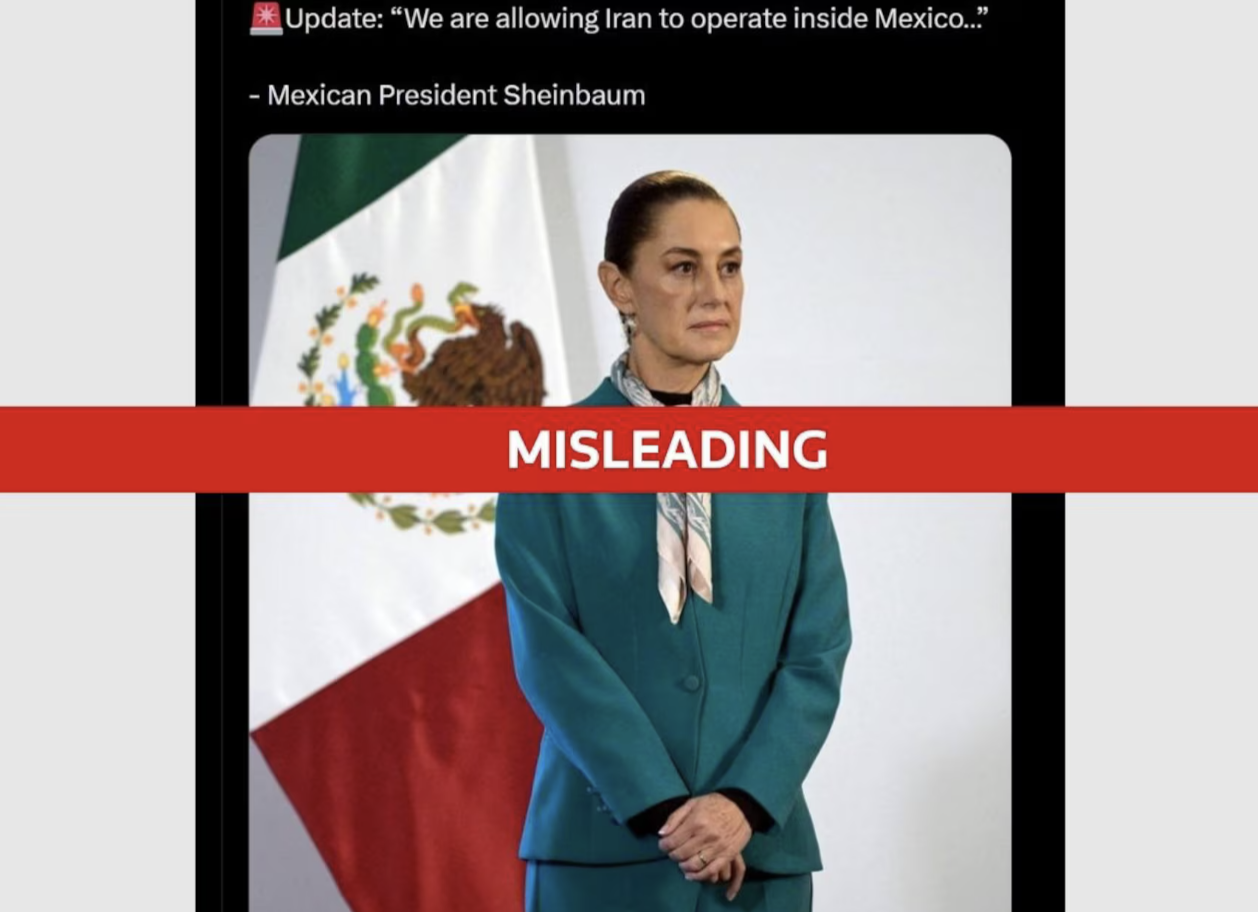
The Iranian soccer team will be based in Tijuana during their World Cup games in Los Angeles because the U.S. declined to host them. But an anonymous social media post on X from a group calling itself ‘US Homeland Security News’ misconstrued the information to take aim at Mexican President Claudia Sheinbaum, falsely claiming that our southern neighbor is allowing enemy combatants ‘to operate inside Mexico’ and triggering our misinformation alert response. Reuters photo
Psypost.org
When political news stories contradict what readers expect from a specific media outlet, those readers tend to think harder about the information and become better at spotting false claims. A recent pair of experiments demonstrated that this mental mismatch prompts people to evaluate the content more thoroughly, leading them to reject inaccurate statements they might have otherwise believed. These findings were published in Communication Research Reports.
For years, scholars have tried to understand why false political information spreads so easily online. Many early studies looked at how people react to corrections after they have already accepted a false claim. Recently, communication researchers have started to evaluate the specific mental processes that occur the exact moment a person encounters questionable news.
LEARN MORE AND READ THE FULL REPORT
ADDITIONAL NEWS FROM THE INTEGRITY PROJECT