
As state primaries continue, remaining vigilant of misinformation should stay top of mind
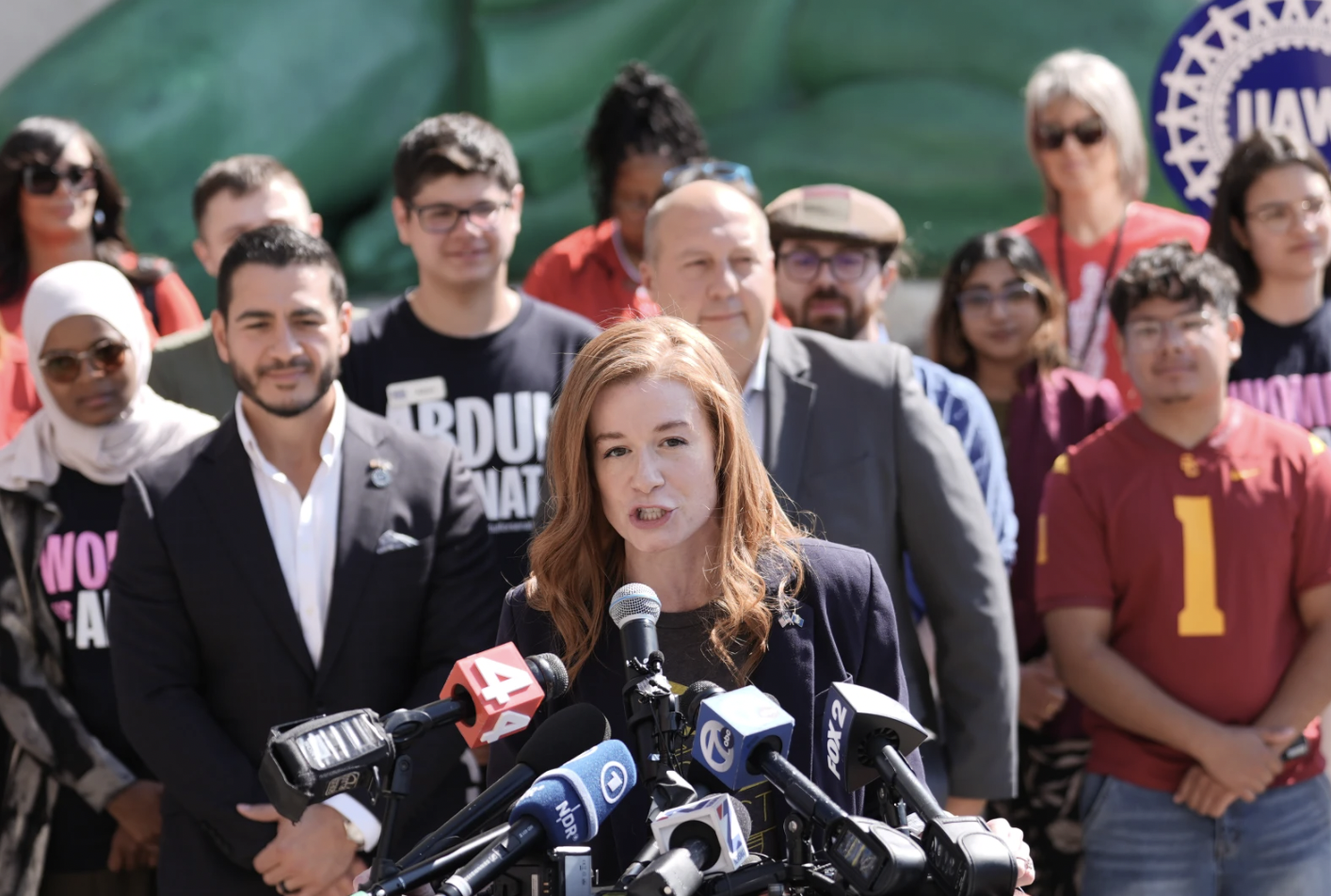
Michigan State Senator Mallory McMorrow, speaks during a news conference with Abdul El-Sayed, standing left, at the Spirit of Detroit shortly after El-Sayed was declared the winner of the Democratic nomination for U.S. Senate in Michigan, Wednesday, Aug. 5, in Detroit. AP photo by Julia Demaree Nikhinson
The Associated Press
The establishment and progressive wings of the Democratic Party will face off once again as voters choose party nominees in state primaries in Connecticut, Minnesota, Vermont and Wisconsin. In Alabama, the state’s four redrawn congressional districts will hold special primaries on the new map, and South Carolina Republicans will choose a nominee to replace the late U.S. Sen. Lindsey Graham on the ballot.
Alongside the campaigns, false and misleading election claims are once again spreading across social media. These posts can include incorrect polling locations, inaccurate voting hours, manipulated images, AI-generated videos, or unofficial election results presented as fact. Because this information can spread quickly, voters may have difficulty separating verified updates from viral misinformation.
Election officials encourage voters to confirm polling information through their state’s official election website before casting a ballot. Experts also recommend waiting for official election offices and reputable news organizations to report results instead of relying on screenshots or anonymous social media accounts. Sharing unverified election content can create confusion and undermine public confidence in the voting process. Taking a few moments to verify information before sharing it can help reduce the spread of misinformation.
As today’s primaries unfold, checking the facts before clicking “share” is one way every voter can help protect the integrity of the election.
LEARN MORE AT THE ASSOCIATED PRESS’ FACT CHECK PAGE
ADDITIONAL NEWS FROM THE INTEGRITY PROJECT