Loose Talk of ‘Fake News’ Is Bad for Democracy
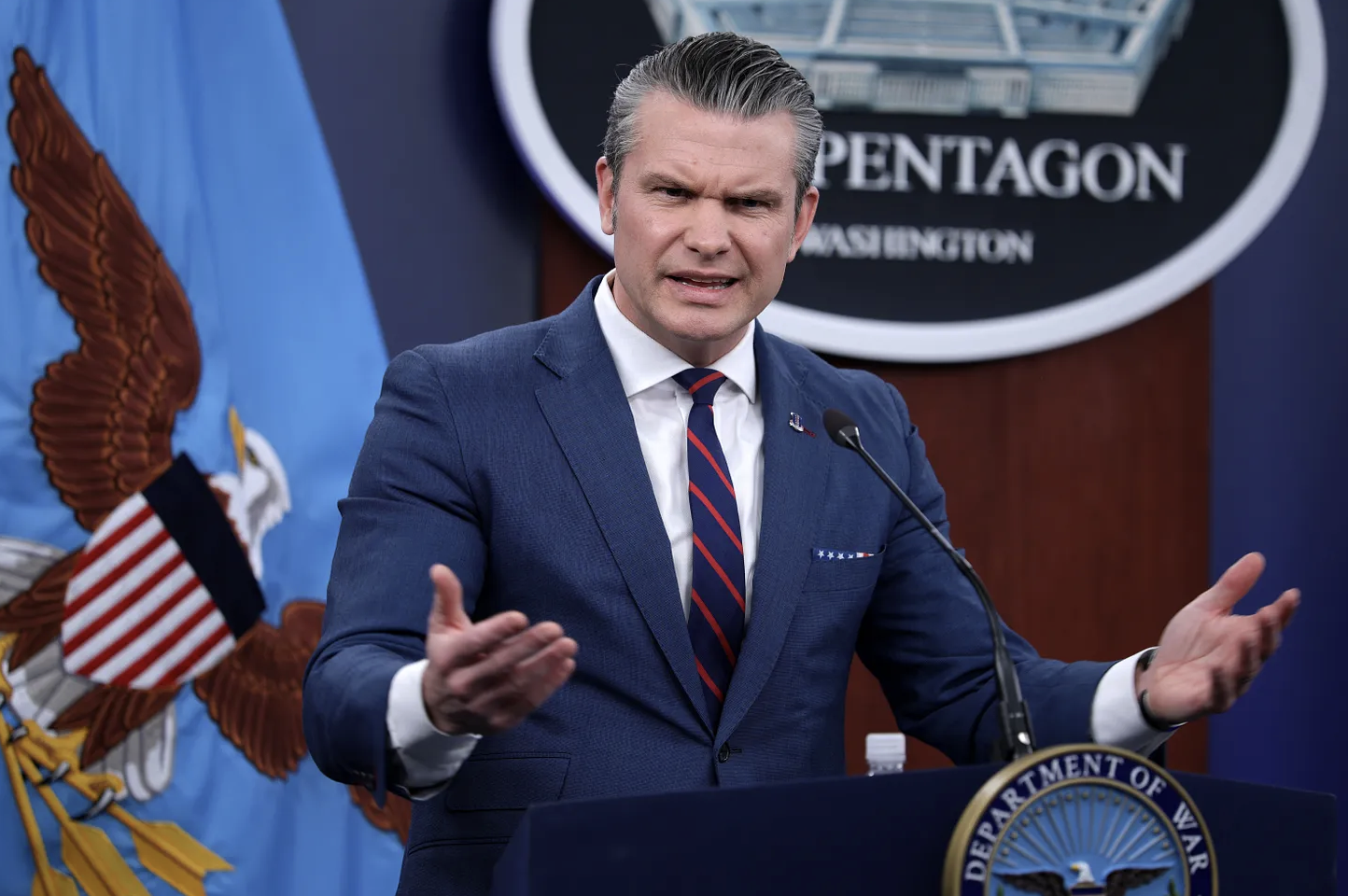
Secretary of Defense Pete Hegseth provides a briefing on the situation in Iran on March 2, 2026. Photo by Alex Wong/Getty Images
The Bulwark
During times of war, Americans instinctively look for two things: protection and truth.
Our citizens expect our military to defend the nation, and they expect our press to tell us what is happening. That expectation is not a cultural accident or partisan preference; it is constitutional design. The First Amendment to the Constitution states plainly, “Congress shall make no law . . . abridging the freedom of speech, or of the press.” The Founders cherished that protection because they had lived under a crown that punished dissent and manipulated information. They understood that a republic cannot survive if its citizens are kept in the dark or are misled.
That is why it is so troubling when senior government officials stand at a podium, especially during wartime, and point at reporters and dismiss them as “fake news”—especially when their statements could be taken as equating the American media with foreign enemies. That’s why I grimaced when, in his first public remarks since the beginning of the attack on Iran, Secretary of Defense Pete Hegseth said, “President Trump and I have your back always, through fire, through criticism, through fake news, through everything, we unleash you because you are the best, most powerful, most lethal fighting force the world has ever seen.” When senior American officials talk like this—especially during combat operations involving American troops—they are undermining a constitutional institution specifically designed to inform the people and hold power accountable.
This article from The Bulwark was authored by Lt. Gen. Mark Hertling (Ret.), who was commander of the U.S. Army Europe from 2011 to 2012. He also commanded the 1st Armored Division in Germany and Multinational Division-North during the surge in Iraq from 2007 to 2009.
ADDITIONAL NEWS FROM THE INTEGRITY PROJECT