AI slop is infiltrating feeds. We can help teens recognize it.
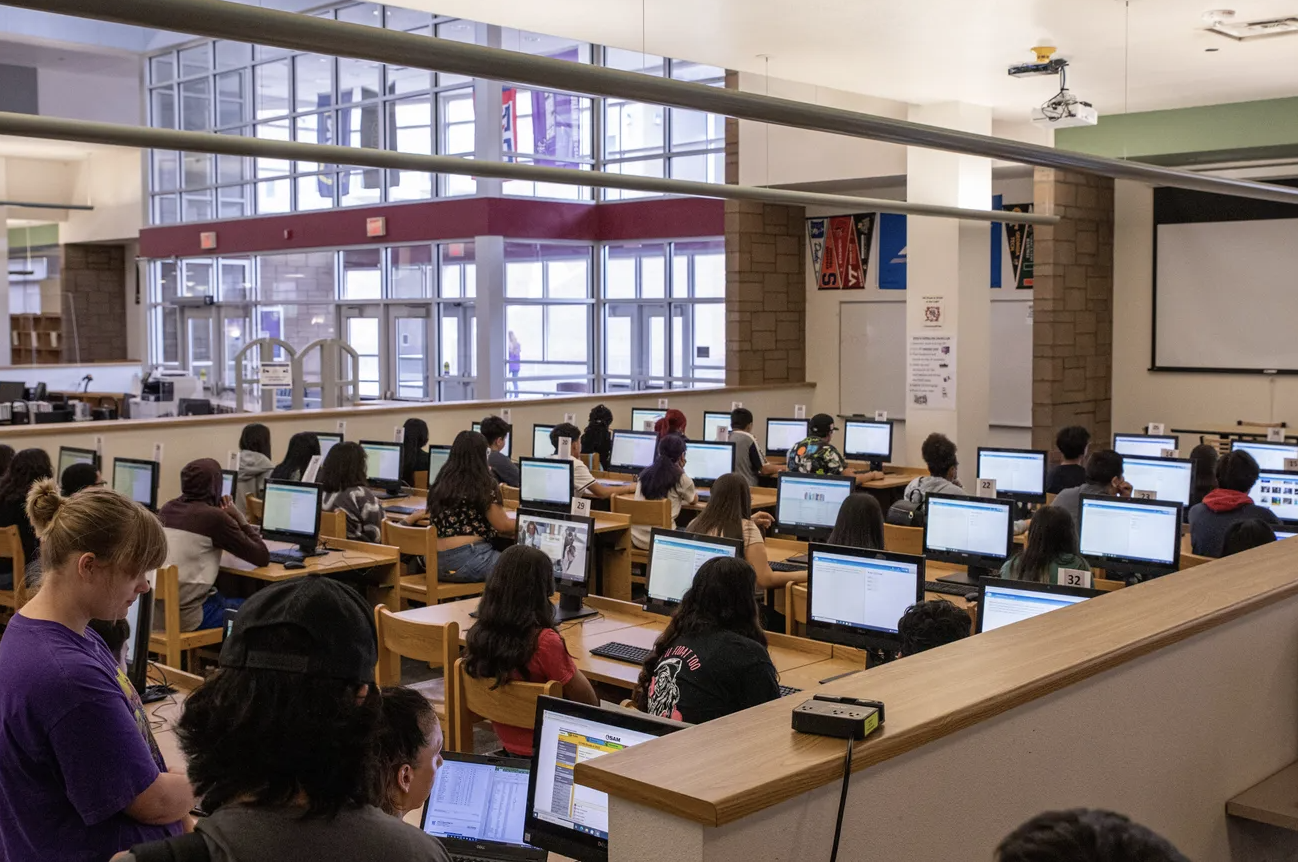
High school freshman students take a reading test during orientation in Laveen, Ariz. in 2022. Photo by Alberto Mariani / The Arizona Republic
USA Today
As a teacher librarian, I am alarmed by record-low reading scores across the country. I’m also challenged to find ways to engage a generation of students accustomed to nonstop entertainment beaming from their screens.
I’ve found that integrating news literacy instruction helps teach the critical thinking skills that our students need, not only to become better readers, but also to get them more invested in their learning. It’s an answer to that age-old question teachers hear from their students: "When am I ever going to use this in real life?" News and media literacy directly connect to their daily scrolling habits.
Teaching these skills doesn’t have to be a burden for teachers who already have too much on their plates. News literacy can be integrated into existing lessons to push students to become better thinkers and readers. In an artificial intelligence information environment full of AI slop, viral rumors and endless hot takes, our kids deserve to learn how to separate fact from fiction and make up their own minds about important issues.
ADDITIONAL NEWS FROM THE INTEGRITY PROJECT