Hosts Drs. Andrea Love and Jessica Steier begin Season 4 with a conversation with Dr. Peter Hotez of Baylor University, a renown vaccine researcher and outspoken critic of the anti-science movement.
Unbiased Science

Hosts Drs. Andrea Love and Jessica Steier begin Season 4 with a conversation with Dr. Peter Hotez of Baylor University, a renown vaccine researcher and outspoken critic of the anti-science movement.
Unbiased Science
This year, more than 83 significant elections are scheduled to take place around the world and the threat that election disinformation poses has become an uncontested concern.
Forbes
TikTok's cash-for-creators program could speed the spread of spammy misinformation on the platform as video makers lean on AI to hook viewers with outlandish images, conspiracy theories and hokum.
Axios
As big tech firms wrestle with how to keep false and harmful information off their social networks, the Supreme Court is wrestling with whether platforms like Facebook and Twitter, now called X, have the right to decide what users can say on their sites.
CBS News / 60 Minutes
Law enforcement officials are taking steps to put up guardrails ahead of the 2024 elections, where long-festering misinformation from 2020 is expected to heighten tensions — especially in the battleground state of Arizona.
The Hill
After weathering a yearslong political and legal assault, researchers who study disinformation say they see reasons to be cautiously hopeful as their efforts heat up ahead of the 2024 election.
NBC News
With the 2024 elections looming, the Department of Homeland Security has a little-noticed weapon in its war on disinformation: comic books. Few have read them, but the series is attracting criticism from members of Congress.
The Intercept
Videos, images and text created by generative artificial intelligence tools are turning up in elections, for sale on Amazon and even in court documents. Learning to identify the growing flood of deepfakes, along with online conspiracy theories, is becoming a rite of passage for students.
National Public Radio
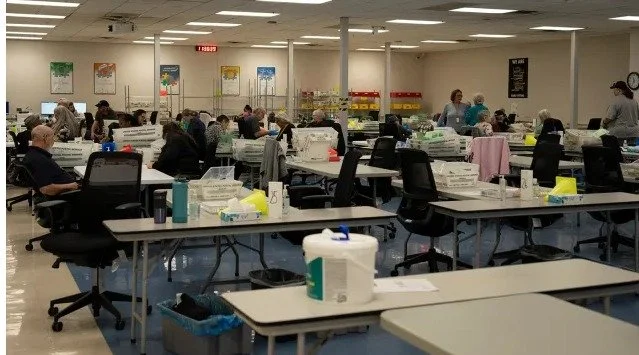
The room sits behind a chain-link fence, then black iron gates. Guards block the entrance, which requires a security badge to access. The glass surrounding it is shatterproof. What merits all these layers of protection is somewhat surprising: tabulating machines that count the votes during elections in Arizona’s Maricopa County.
The Associated Press
Search for “birth control” on TikTok or Instagram and a cascade of misleading videos vilifying hormonal contraception appear: Young women blaming their weight gain on the pill. Right-wing commentators claiming that some birth control can lead to infertility. Testimonials complaining of depression and anxiety
The Washington Post
Warnings about deepfakes and disinformation fueled by artificial intelligence. Concerns about campaigns and candidates using social media to spread lies about elections. Fears that tech companies will fail to address these issues as their platforms are used to undermine democracy ahead of pivotal elections.
The Associated Press
Media messages have powerful shaping effects on individuals and society, influencing how we think, feel, and behave. These effects are further exaggerated by our constant inundation with media messages.
Media Literacy Now
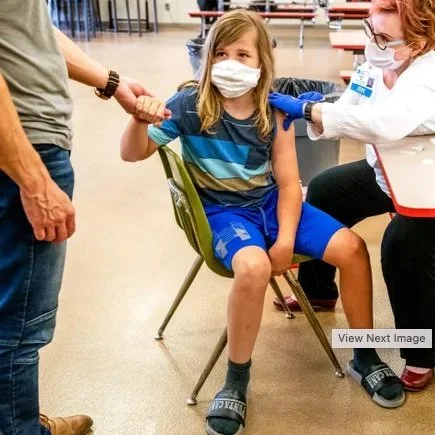
Though the pandemic no longer dominates headlines as it once did, misinformation about nearly every aspect still spreads online. More than 1.1 million people in the U.S. have died of COVID-19, including hundreds of thousands who, for reasons often rooted in misinformation, chose not to get vaccinated. About 30% of the population hasn't received the initial series of vaccines.
USA Today
Watermarking has been floated by Big Tech as one of the most promising methods to combat the escalating AI misinformation problem online. But so far, the results don’t seem promising, according to experts and a review of misinformation conducted by NBC News.
NBC News
The spread of health-related misinformation and fake science news is not a trivial matter. When it comes to health, lives can be at stake.
Psychology Today
Meta Platforms plans to shut down a data tool long used by academic researchers, journalists and others to monitor the spread of content on its Facebook and Instagram services, the company said last week.
Wall Street Journal
This election season, Arizonans will play a crucial role in deciding which party will control Congress and who will occupy the White House. However, as we learned in 2020 and 2022, disinformation targets our communities, sowing distrust, manipulating voters and potentially threatening our voice at the ballot box.
Arizona Mirror
In a major case testing the role of the First Amendment in the internet age, the U.S. Supreme Court on Monday hears arguments focused on the federal government's ability to combat what it sees as false, misleading or dangerous information online.
National Public Radio
Artificial intelligence is supercharging the threat of election disinformation worldwide, making it easy for anyone with a smartphone and a devious imagination to create fake – but convincing – content aimed at fooling voters.
The Associated Press
A recent social media post made what appeared to be a surprising announcement about the 2024 presidential race.
PolitiFact