Could You Be Misled by What You Read About the Supreme Court's Latest Rulings?
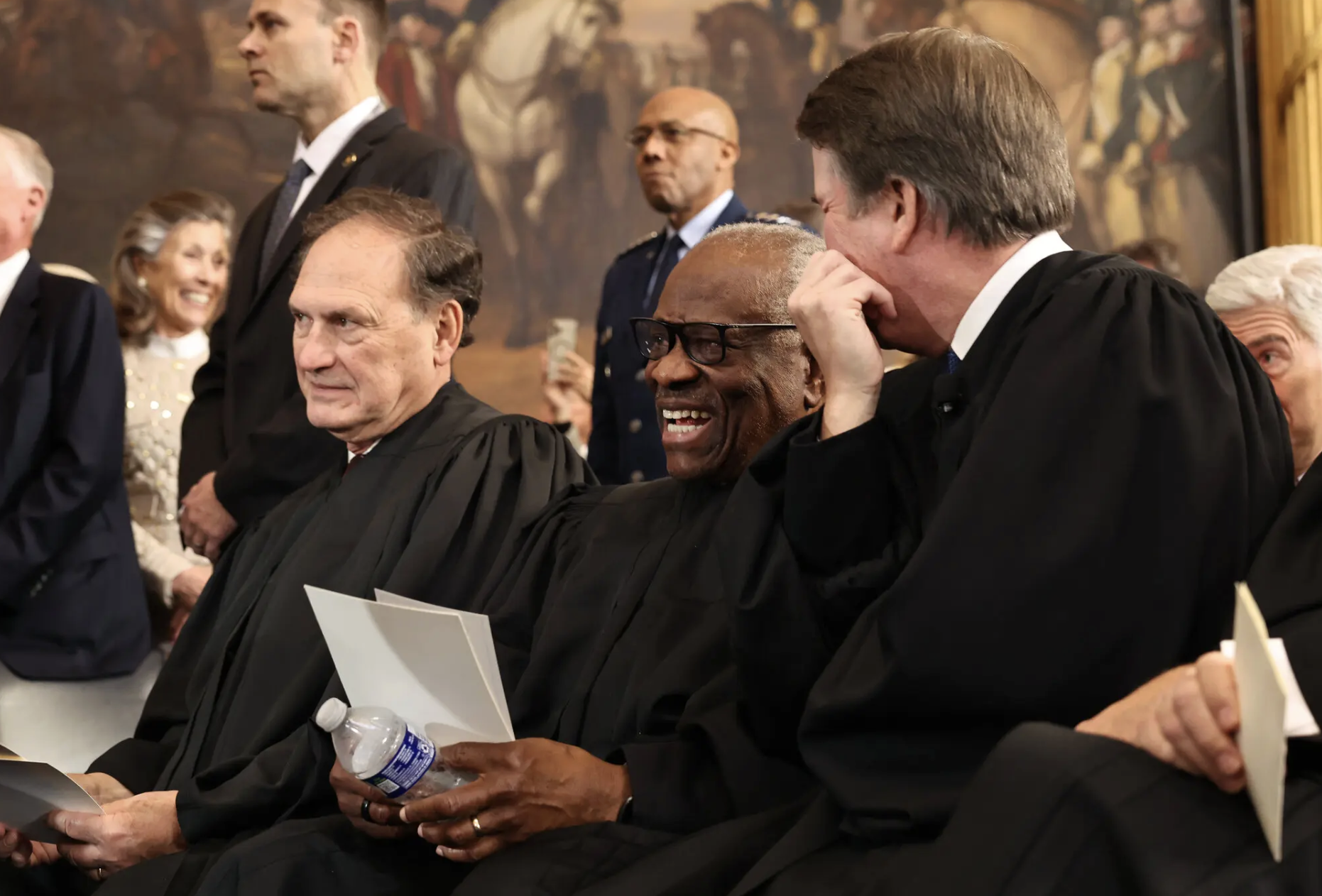
Justice Samuel A. Alito Jr. (left) with Justices Clarence Thomas and Brett M. Kavanaugh at President Trump’s inauguration in 2025. Photo by Chip Somodevilla.
The Integrity Project
The Supreme Court of the United States released several significant decisions last week, including rulings including decisions on birthright citizenship, campaign finance, and transgender athletes, prompting widespread discussion across social media. As news of these decisions spread across social media, experts cautioned that misleading posts and out-of-context claims could cause confusion about what the Court actually decided.
Because Supreme Court opinions are often lengthy and legally complex, short videos and viral graphics may omit important details that change the meaning of a ruling. False or incomplete information spreads quickly when users share content without verifying the source or reading beyond the headline. Media literacy experts encourage the public to rely on official court opinions and reporting from trusted news organizations before drawing conclusions or sharing information online.
As public discussion continues, verifying claims can help prevent misinformation from shaping how Americans understand some of the nation's most consequential legal decisions. Find reliable resources below from The New York Times and the Legal Information Institute at Cornell University.
Dedicated coverage of the U.S. Supreme Court by The New York Times
More recent Supreme Court decisions by the Legal Information Institute at Cornell University
ADDITIONAL NEWS FROM THE INTEGRITY PROJECT